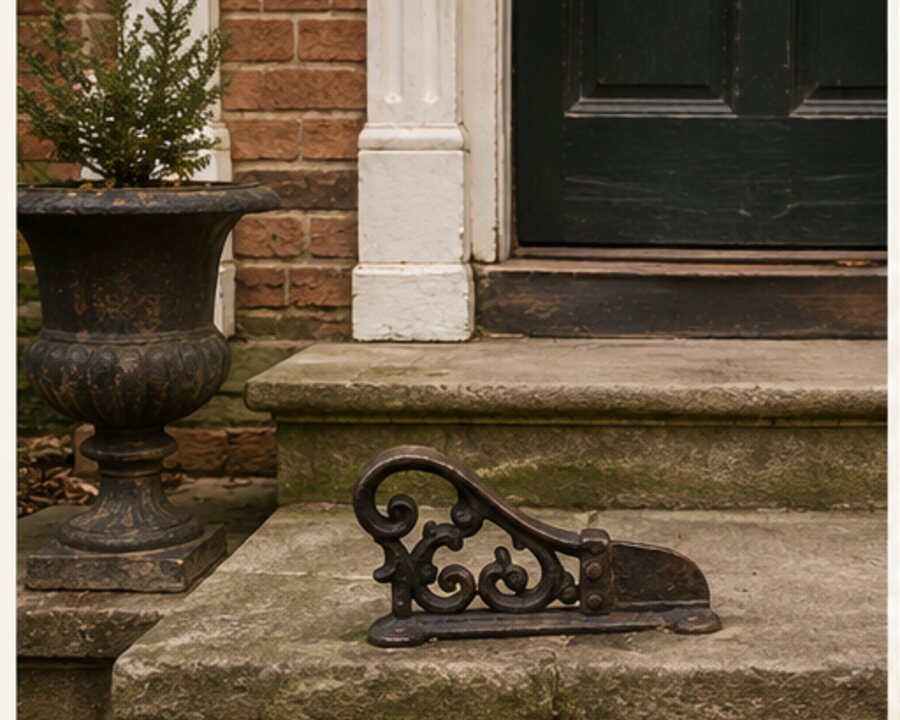
The small iron bar beside the step is too low for a railing and too strong for decoration. It met every dirty shoe before the front hall did.
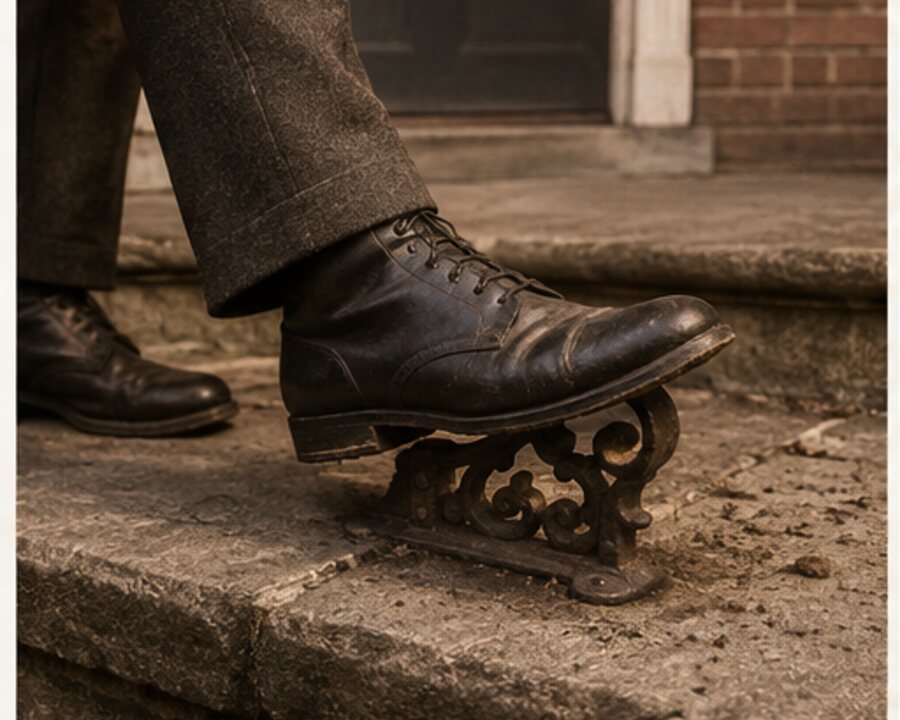
Before paved streets, sidewalks, modern drainage, and today’s cleaning equipment, mud was a constant domestic problem. A boot scraper gave visitors a hard edge against which to drag a sole before entering. Forms include simple bars, decorative cast-iron loops, recessed stone slots, and portable devices.
Placement is the best first clue
A scraper belongs where a person naturally pauses: beside a step, stoop, porch entrance, or service door. The user needs footing and clearance to draw a boot across the edge. An iron fragment in a garden or mounted at hand height is less convincing.
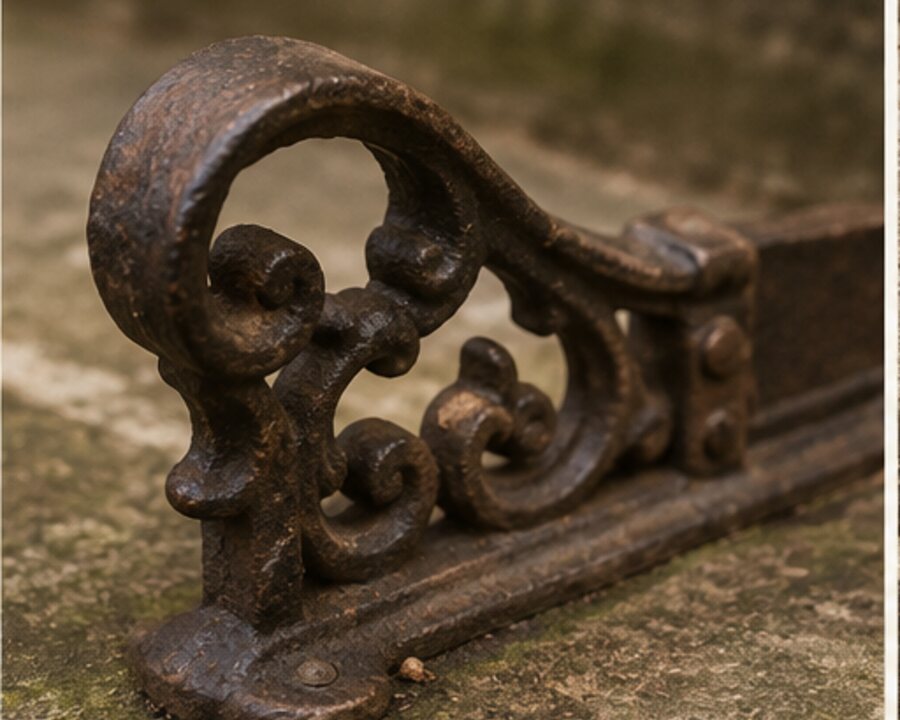
A small object protected expensive interiors
Removing mud at the threshold reduced dirt on carpets, wood floors, and stair halls. Mats and brushes could supplement the scraper. The device makes a broad social fact tangible: maintaining a clean formal interior began before anyone crossed the door.
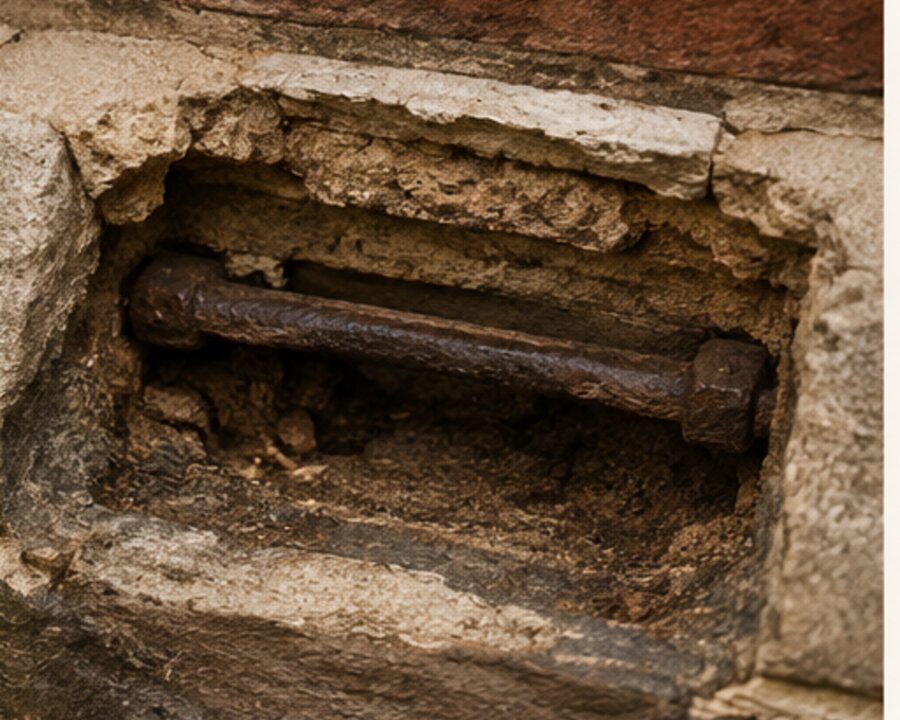
Front and service entrances tell different stories
An ornate scraper may contribute to a designed front approach, while a plain bar at a rear door records daily work. Both are historically informative. Comparing paths, porches, and floor wear helps explain who used each entrance and under what conditions.
Why so many disappeared
Changes in paving, porch reconstruction, landscaping, and accessibility removed scrapers. Protruding iron can also become a trip hazard. Surviving pieces may be loose from corrosion at the masonry socket, even when they look solid.
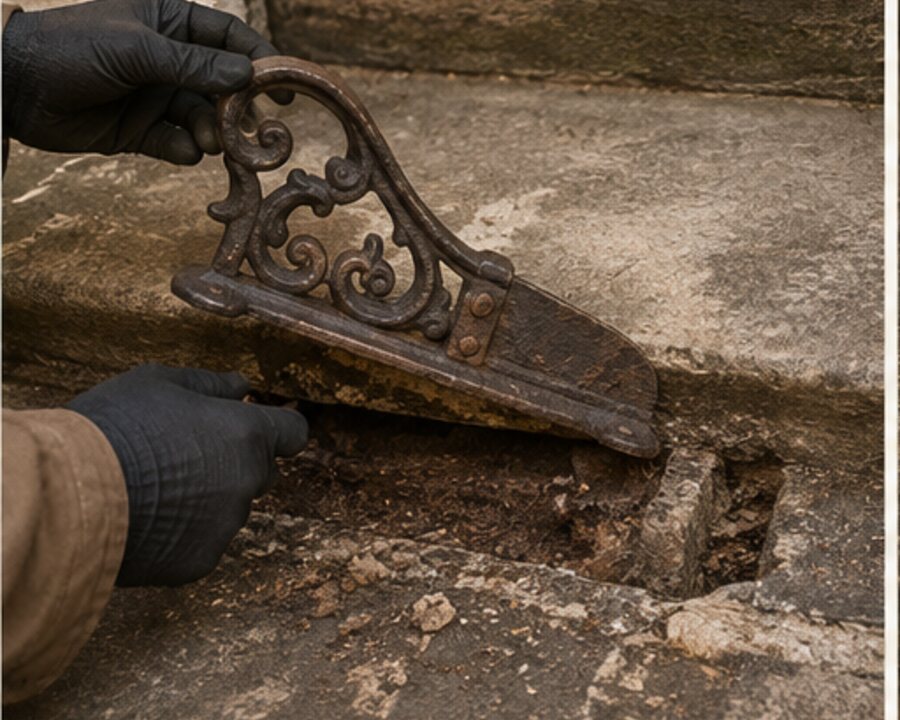
What to look for in an old house
- Low iron edge located at a natural pause beside a step
- Wear or polished metal along the scraping surface
- Secure historic attachment into stone, brick, or porch structure
Before you alter or remove it
Check stability without pulling or kicking. Address sharp edges and trip risk while preserving the feature where feasible. Avoid sealing moisture into corroding iron with inappropriate coatings.
The detail that makes this story worth sharing
A fanpage close-up makes the object look mysterious. The linked article should widen to the muddy streets, entrance hierarchy, and floor care it represents.
Sources and further reading
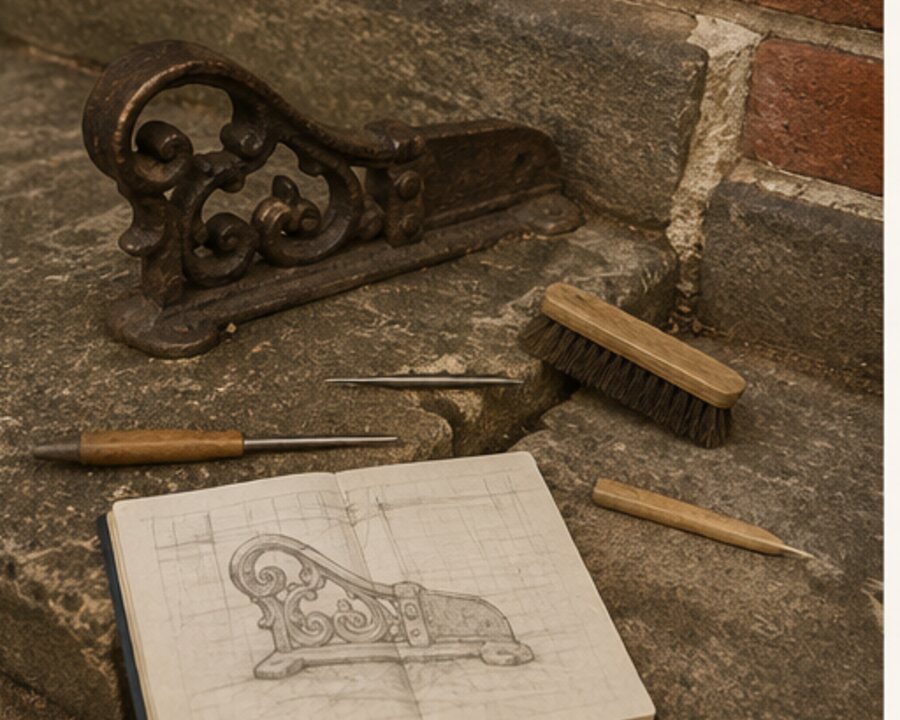
Editorial note: Dates and configurations vary by region, builder, and later remodeling. This article explains common historical patterns and does not identify an undocumented feature in a specific private home. Images labeled as editorial reconstructions are illustrative and are not documentary photographs of a named property.