The ring of long iron keys looks universal. In practice, a key that turns one bedroom lock may do nothing at the next door.
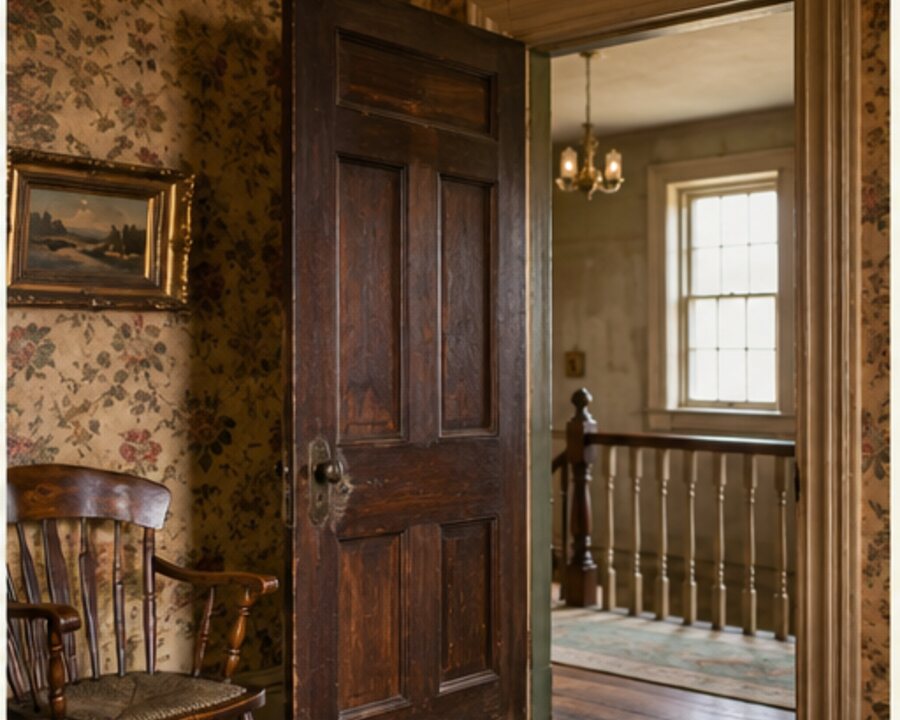
Many old interior doors use mortise locks set into deep pockets cut in the door edge. Keys with shaped bits interact with internal wards or levers depending on the lock design. “Skeleton key” is a popular umbrella term, but it can imply a universality that historic hardware never guaranteed.
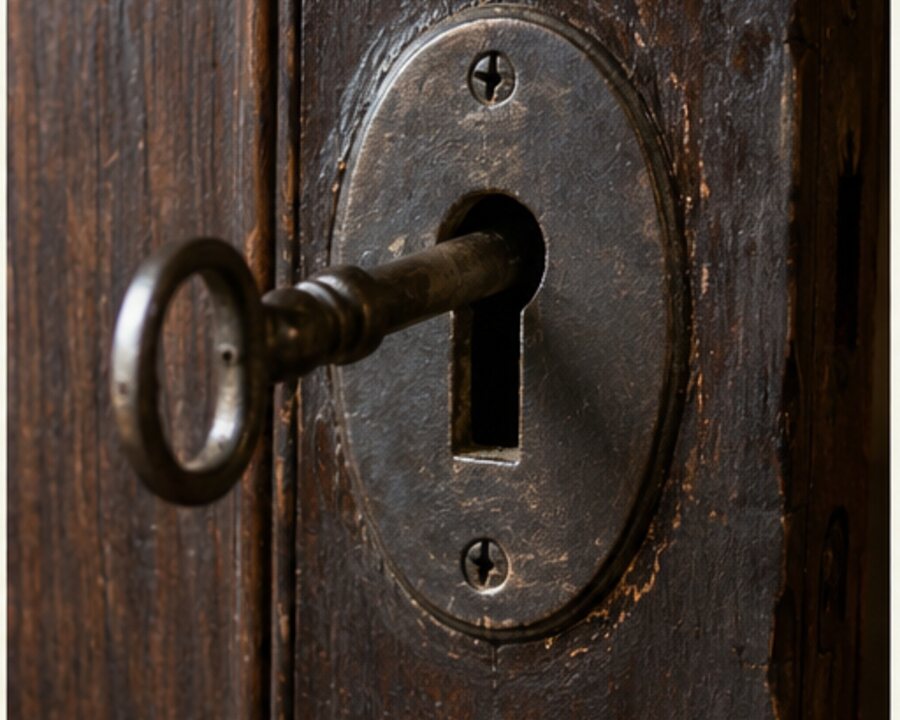
The bit is a mechanical code
The projections and cuts at the end of the key must pass obstructions and move the correct internal part. Keys that look similar can differ in shaft diameter, bit height, thickness, and pattern. Forcing a near match can bend the key or damage a fragile lock.
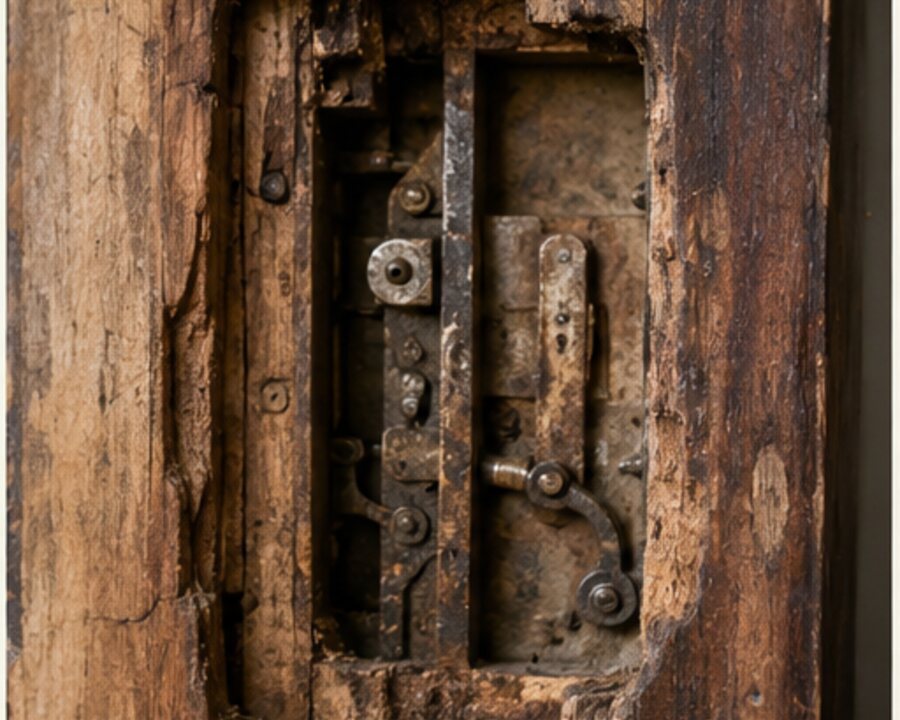
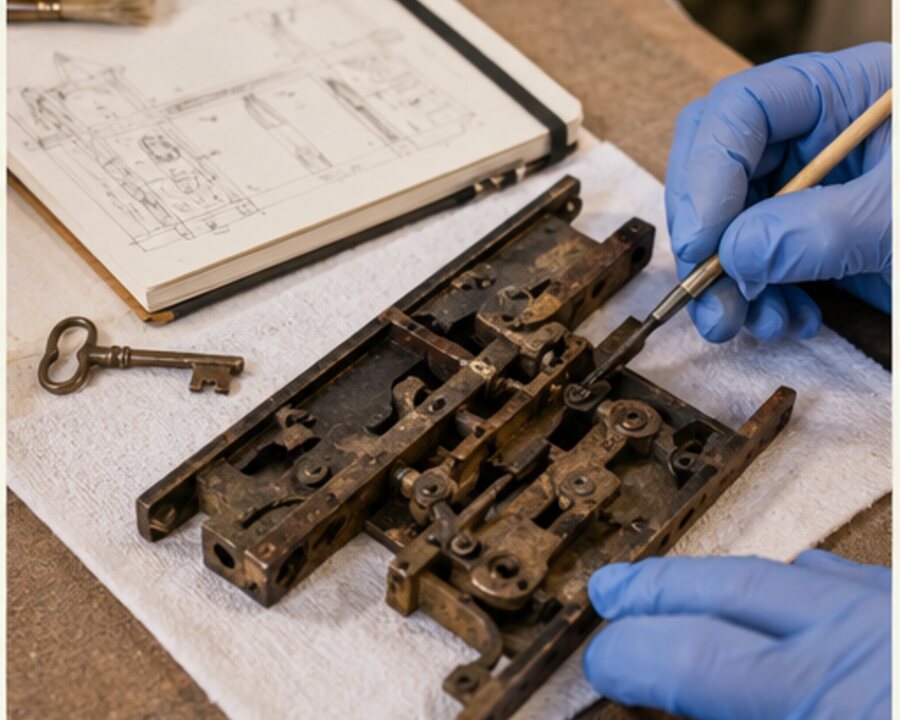
A mortise lock is a removable mechanism
The rectangular case contains latch and lock components; knobs pass through a spindle. Over decades, cases, knobs, escutcheons, and keys are mixed. A Victorian-looking knob does not prove the lock behind it is the same age.
Why old doors stop latching
Loose hinges, building settlement, paint buildup, worn springs, shifted strike plates, and damaged spindles can all mimic a bad lock. Filing the strike or forcing the key may treat the symptom while removing historic material.
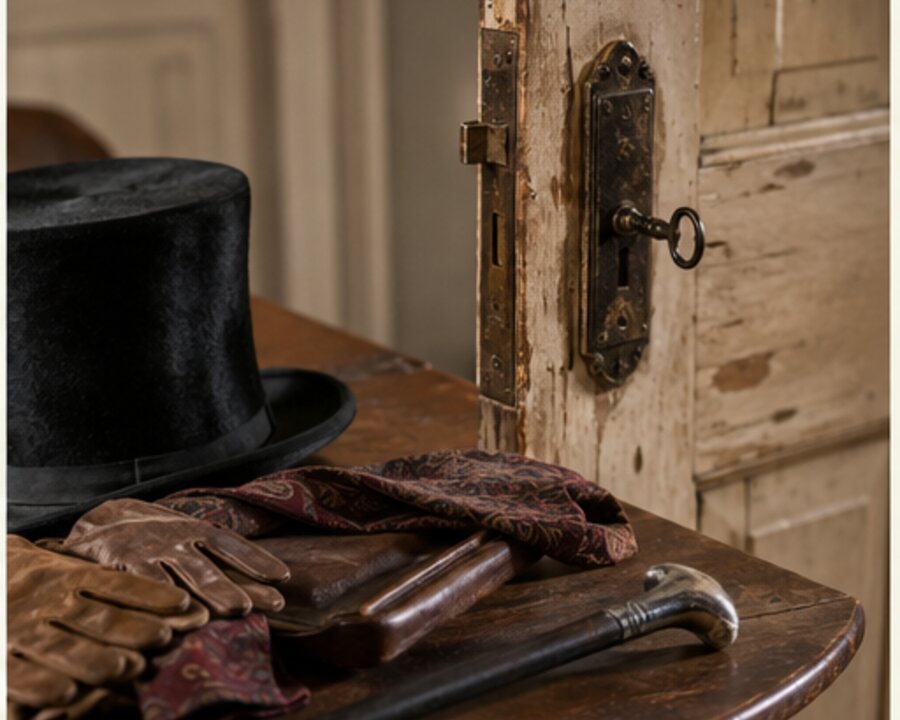
Security and interpretation are separate
An original interior privacy lock can be conserved as hardware. Exterior security requires a current risk assessment; relying on an easily bypassed or poorly fitting antique mechanism may be inappropriate. Modern security can sometimes be added without discarding visible historic hardware.
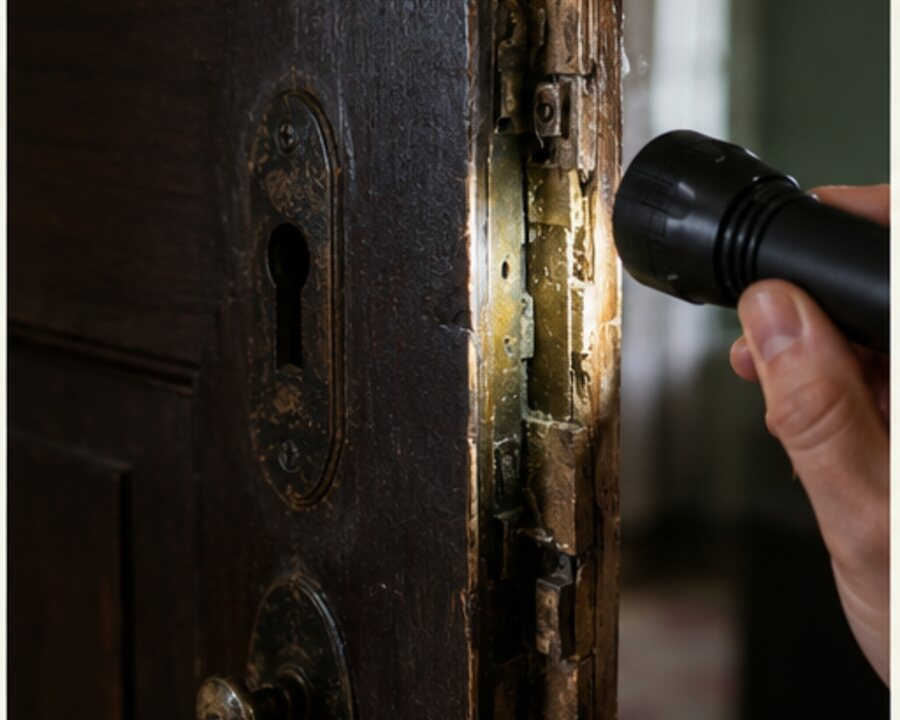
What to look for in an old house
- A rectangular mortise-case outline on the door edge
- Keyhole escutcheons and bits that correspond in height
- Manufacturer stamps visible only after careful professional removal
Before you alter or remove it
Never force a found key. Label where each key was discovered, photograph both sides, and use a locksmith experienced with antique hardware. Keep small keys away from children and document any modern security additions.
The detail that makes this story worth sharing
Show several nearly identical keys and ask why only one works. The article’s value is debunking the “master key for every old house” idea while helping readers preserve the lock.
Sources and further reading
Editorial note: Dates and configurations vary by region, builder, and later remodeling. This article explains common historical patterns and does not identify an undocumented feature in a specific private home. Images labeled as editorial reconstructions are illustrative and are not documentary photographs of a named property.