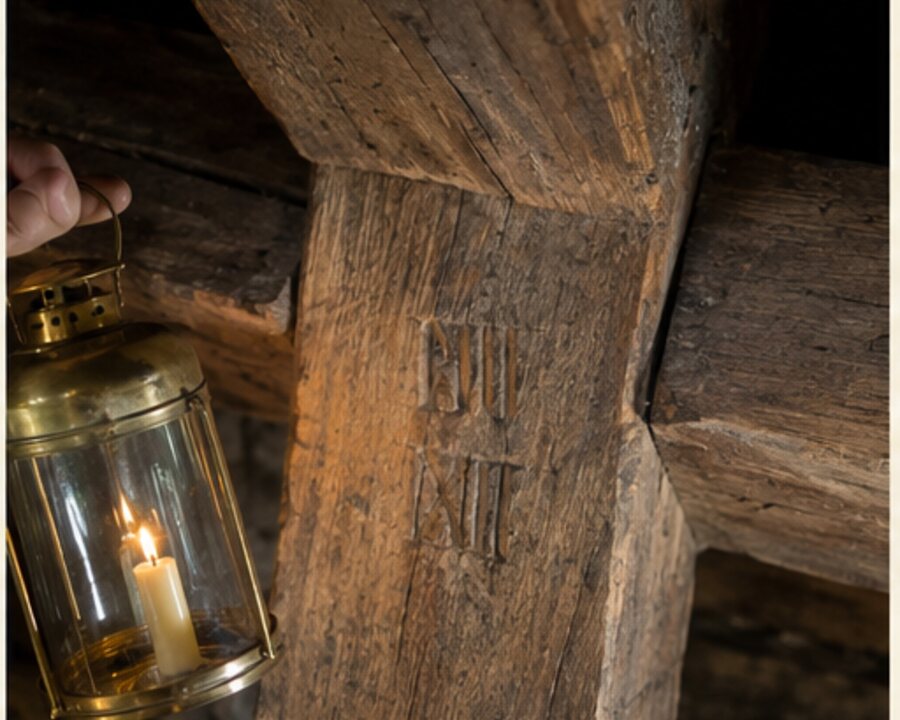
The beam carries a hand-cut “IIII” where no resident would see it. The mark was not decoration—it was an instruction.
In individually fitted framing, carpenters marked corresponding joints and members so pieces prepared on the ground could be assembled in the intended positions. Roman-numeral-like sequences are common because straight cuts are easy to make with a chisel or race knife. Other marks identify orientation, assembly groups, or the craftsperson.
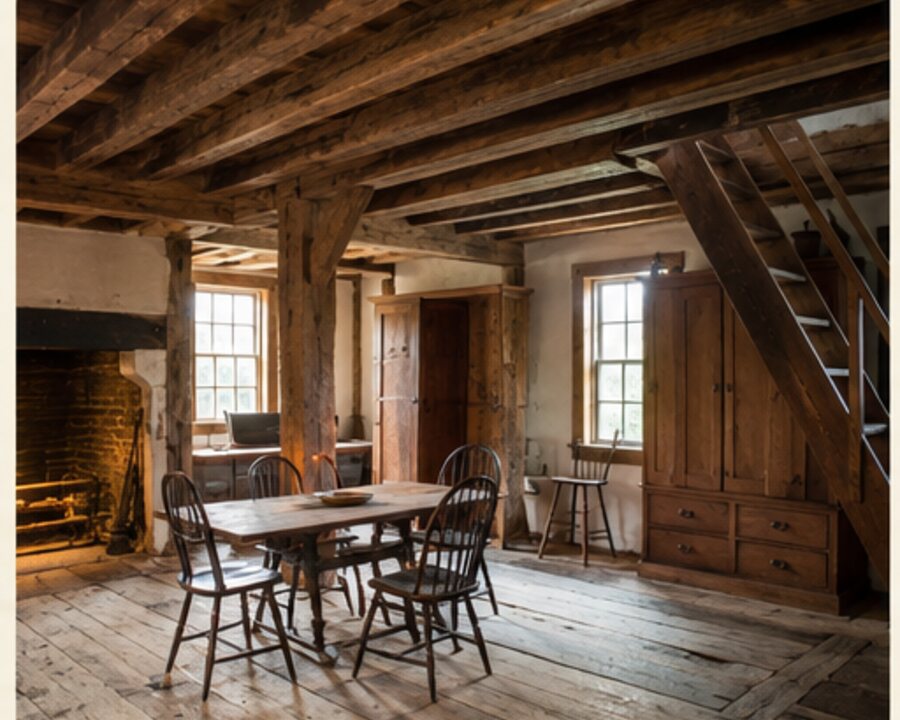
A mark is part of a system
One isolated X may be damage, ownership, or later work. Repeated sequences at joints—especially matching marks on connected members—support an assembly interpretation. The pattern across the frame matters more than any single symbol.
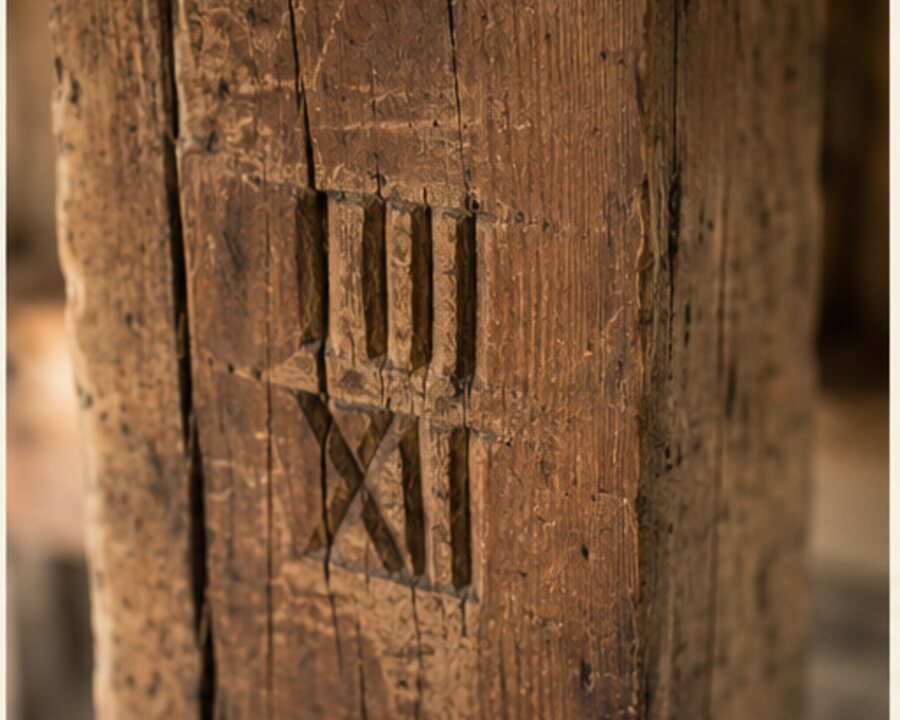
Why four may appear as IIII
Carpenters’ marks are practical notation, not formal typography. Additive strokes can be faster and less ambiguous to cut. Variations, reversed forms, and extra tags may encode sides, bents, or reused pieces.
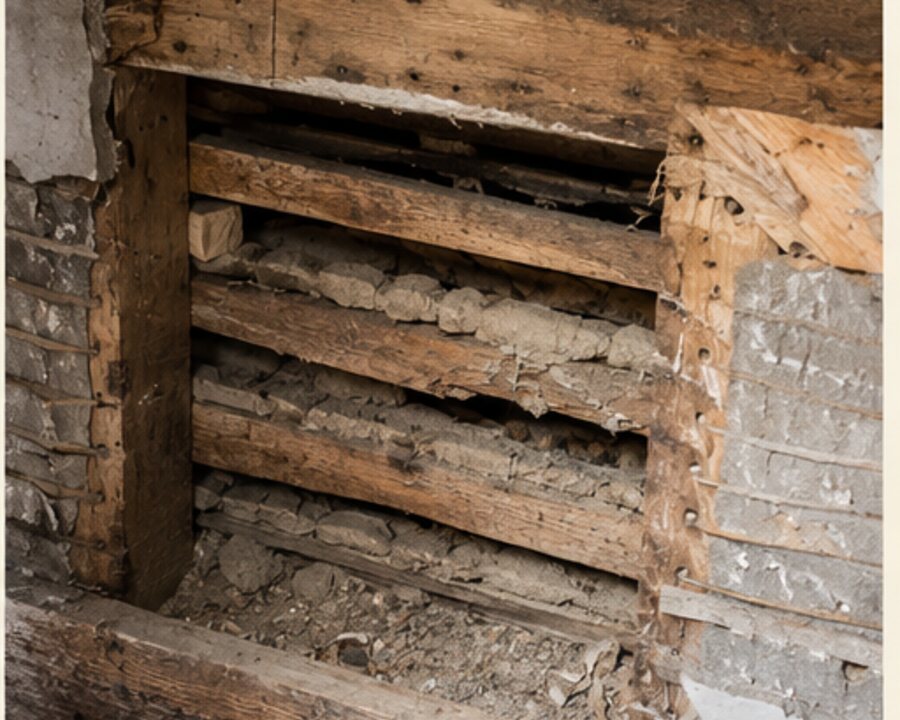
Marks do not automatically date the house
Traditional techniques continued for long periods, old timbers were reused, and later repairs added new marks. Tool type, framing system, dendrochronology, documents, fasteners, and the complete building sequence provide better dating evidence.
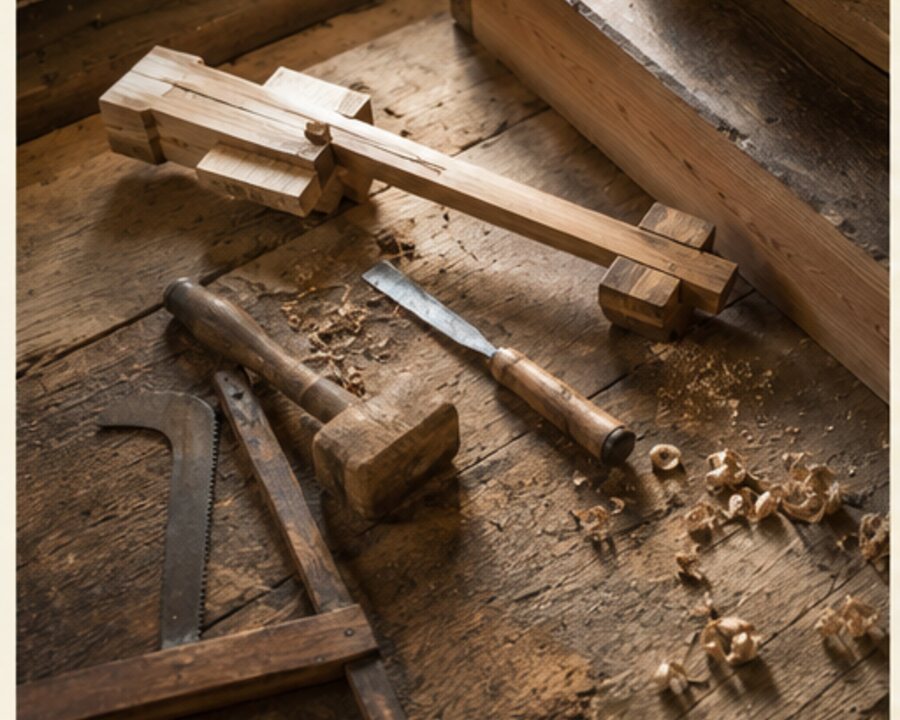
Scribe lines are equally revealing
Fine lines, circles, housings, and offsets show how a joint was laid out. Weathering can make them hard to see. Cleaning a beam aggressively for a rustic appearance may erase precisely the evidence that explains its construction.
What to look for in an old house
- Matching numeral sequences on joined members
- Scribe lines and tool marks near mortises or tenons
- A consistent marking system repeated across framing bays
Before you alter or remove it
Photograph marks with raking light, a scale, and their exact location. Do not chalk, deepen, sand, or oil them for visibility. A timber-frame specialist or architectural historian can map the system.
The detail that makes this story worth sharing
A close-up numeral makes readers expect a secret code. The article gives a better payoff: a real assembly language used by carpenters, with a warning that it is not automatically a construction date.
Sources and further reading
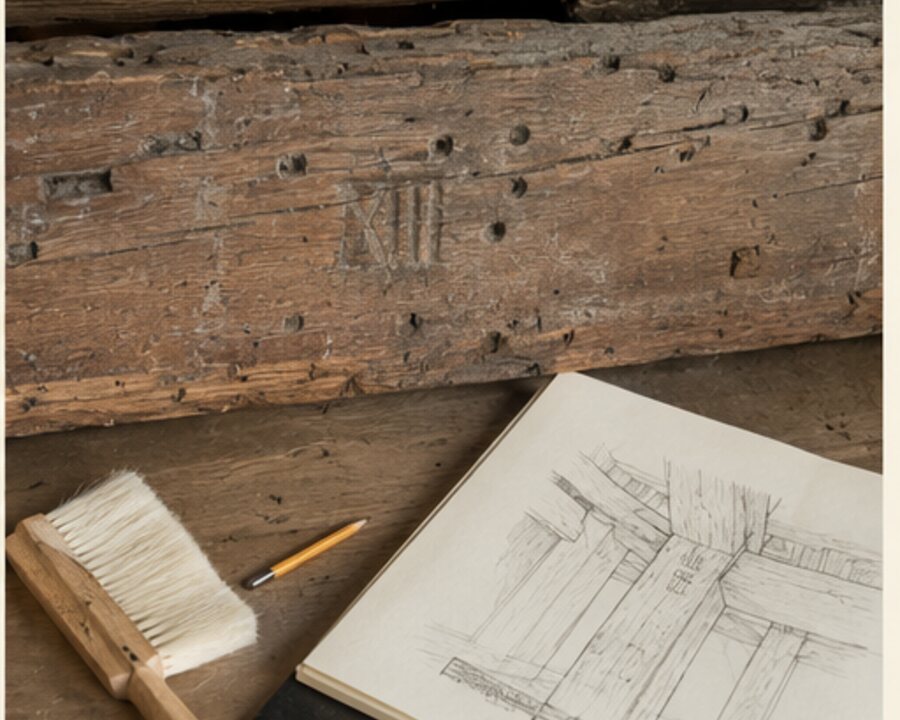
Editorial note: Dates and configurations vary by region, builder, and later remodeling. This article explains common historical patterns and does not identify an undocumented feature in a specific private home. Images labeled as editorial reconstructions are illustrative and are not documentary photographs of a named property.